In Spotify we *don’t* trust?
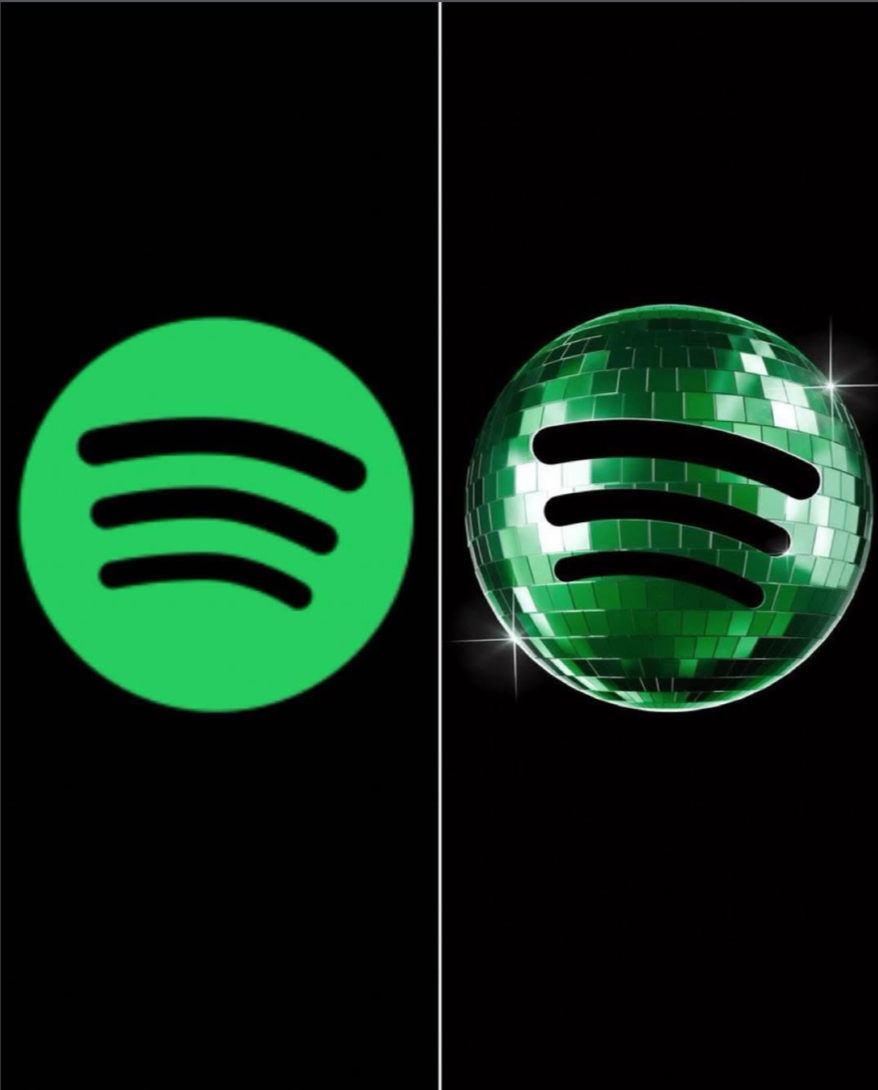
Spotify rolled out their 20th anniversary update with a logo change and a feature that shows your most played songs EVER and more, similar to the annual Spotify Wrapped.
The logo change got under enough people skins (supposedly it’s temporary, too), that they found *more* dirt on the streaming service to change subscribers’ minds.
Personally I thought the logo change was awesome! I’m a big fan of disco balls myself, I even have one tattooed on me. But I do keep seeing Spotify use and apply more unethical practices to the streaming service that concern me.
If you are unfamiliar with Spotify’s ‘cancelled’ past, Spotify's payouts to artists are extremely low but also common knowledge due to the nature of streaming services today.
However, even more backlash came when they advertised ICE and recruiting for agents.
As well as streaming Al artists on the platform, CEO Daniel Ek faced criticism after heavy investments in Helsing, an Al defense company, developing military strike drones.
I want to know where and when the switch happened because Spotify used to be this beloved and respected app that subscribers took their love for it so seriously, arguments filled comment sections. Spotify vs. Apple Music is a viral debate that used to be quite clear who the winner was… Spotify, right.
Now, both of the top competitors are revealing new features to their systems that consumers are uninterested in, leaving the service for an alternative platform that is more transparent and fair. Spotify is just taking a few more punches.
XSTSY MEDIA conducted a survey asking Spotify subscribers their thoughts on the streaming service’s backlash.
With 15 participants who subscribe to Spotify, XSTSY MEDIA asked which unethical practices do they find most urgent to combat. Three people said the unfair pay to artists, six people said the advertisement of ICE and 6 people said the CEO’s investments in AI.
XSTSY MEDIA asked participants how often they use features such as ‘Mix,’ prompts and creating cover art that utilize AI for the program. Three people said all the time, four people said here and there and six people said never.
Online discourse from Spotify users say their Spotify used to be way more personal and they feel like the application now tends to stick to a repetitive algorithm that cycles the same 5-6 songs when you hit shuffle.
With the introduction of AI to the app, its data collecting process does not seem to expand beyond a few songs. This makes listeners use the feature less, ultimately becoming ‘unnecessary.’
XSTSY MEDIA asked if participants use the ‘DJ’ feature on spotify and if they do, does it curate the right vibe.
Four people said that they don’t use it, two people said yes, two people said no and two people said yes, but it gets repetitive.
XSTSY MEDIA compared artist pay outs of Spotify and Apple Music to their alternatives who are gaining popularity.
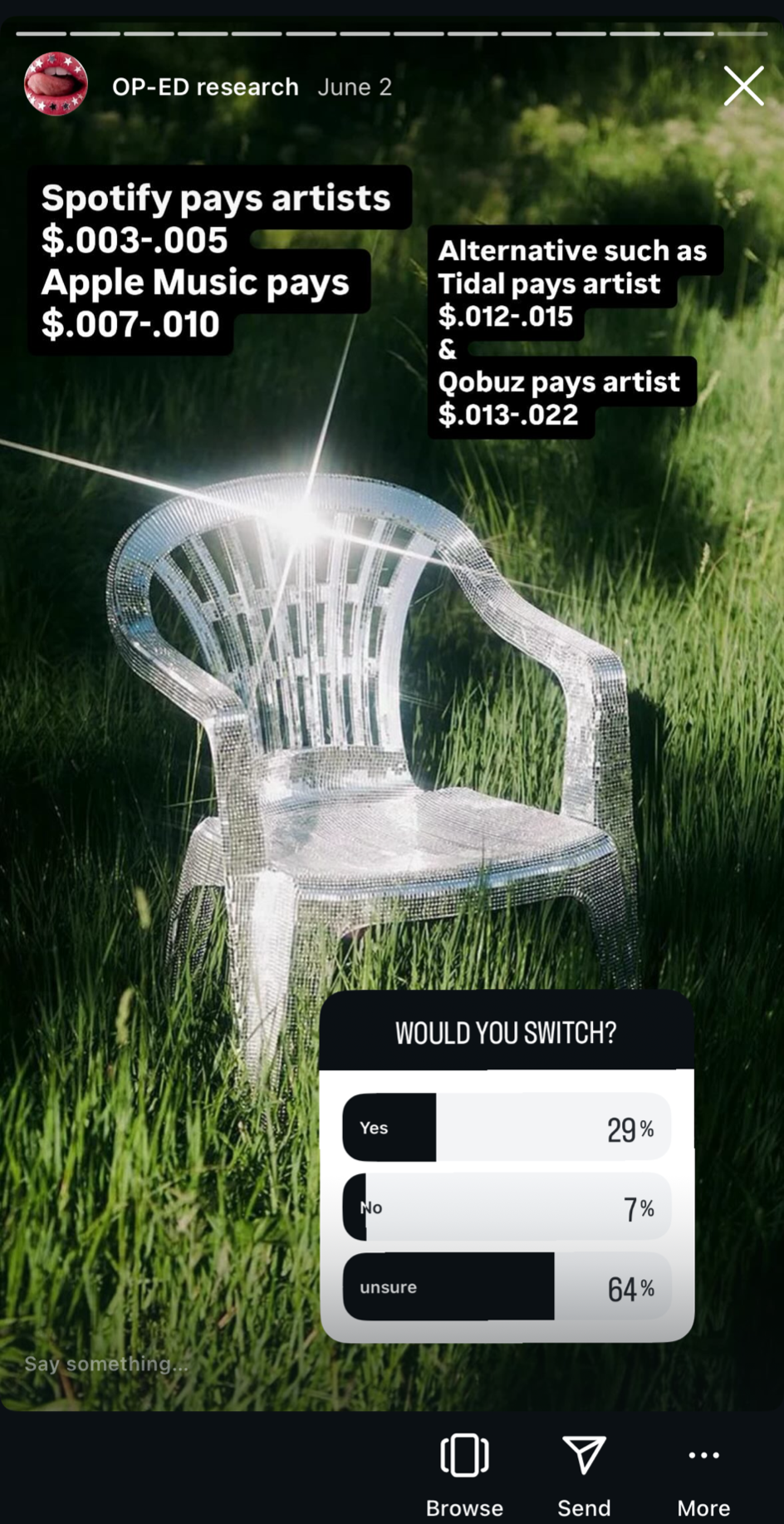
We asked if after learning the difference in payouts, would the participants switch streaming service platforms.
Four people said yes, one person said no and nine people were unsure.
Due to the data collected, it feels like a majority of the people are struggling with a personal ethics battle.
XSTSY MEDIA did leave a prompt for participants to leave other comments and acknowledged the hard decision to switch especially when subscribers receive such personalization with the mixes curated from listening patterns, Spotify Wrapped and the 20th anniversary specials.
Aenny Navidad, Los Angeles resident said she already made the switch from Spotify in which she shared a Premium Duo account with her partner.
Joining Spotify in 2013, Navidad's favorite parts of the streaming service were the music algorithm suggestions, different exclusive experiences like learning your position in your top artists’ listening percentile, Blend playlists, Duo and Summer Rewind.
"I love the way I could personalize my playlists and share my playlists with others," Navidad said. " Playlists (in general), astrology playlists, pet playlists. I loved me the playlists, and eventually end of year Wrapped of course."
Navidad said the switch birthed from firsthand concern of the Spotify CEO investing $ 700 million in AI weapons, via his chairmanship with Helsing. However, more concerns followed.
"That was actually the first incentive for me (and my partner) to switch platforms," Navidad said. "Regarding the actual Department of Homeland Security and ICE ads, I heard them first in a Lyft ride on public radio station, in Spanish by the way.
Navidad mentioned how Premium accounts do not get advertisements, so it would be an easy way to miss that this was happening.
A few other reason Navidad made the switch to the free version of YouTube with an ad blocker or listening to artist livestream on TikTok, include concerns such as more AI in the software and implementation on the platform, lack of transparency on payouts to artists and the 17% of layoffs to staff with the increase of AI tools, all while the CEO becomes a billionaire.
Navidad explained the long process of transferring data from one‹ streaming service to another.
"Just be patient if you have a large library. Not everything transfers either due to licensing or other platform restrictions." Navidad said
The alternative streaming platforms, Tidal currently has 7.2 million subscribers and Qobuz currently has 1.2 million subscribers compared to Spotify’s 239 million premium subscribers and Apple Music’s 100 million subscribers, according to SQ Magazine.
Personally, I have tons of playlists I curated over the past 10 years and I’m truthfully finding that as my only factor to not switch (right now).
Music may never return to the days of buying the physical copy and the proceeds going quite directly to the artist. However either protesting against or being aware of big companies and applications that work with unethical systems, can potentially change the mind of another.
Editor-in-Chief, Sarah Van Buskirk can be reached at bysarahvanbuskirk@gmail.com.
Post a comment