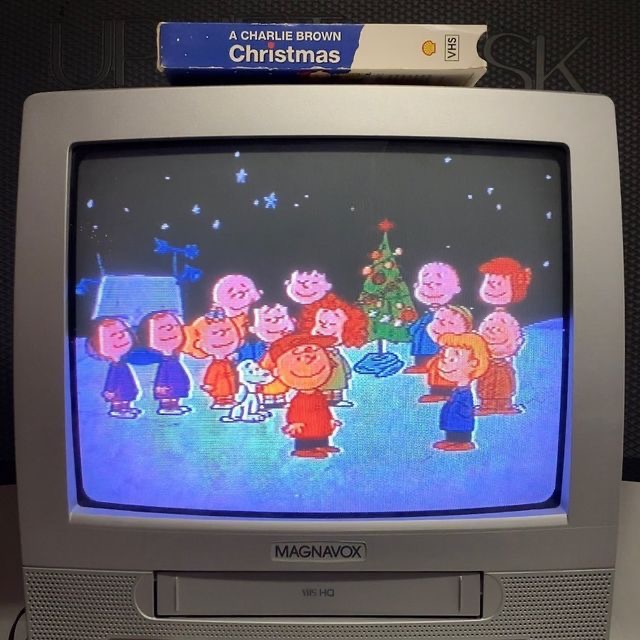
Handling grief during the holidays
The holidays can be a fun and joyful time with family and friends, but it can also be difficult for those mourning a lost loved one. While the twinkling lights and green wreaths can make you feel warm inside, it can also trigger some more complicated feelings, reminding you that there’s someone missing during this season. Or maybe the holidays in general are a more sorrowful time for you than a happy one, triggering some complicated memories or past trauma. Maybe you struggle to find joy in celebrating because of your grief.
It’s completely normal during this time of the year to mourn the loss of a loved one who is no longer there to celebrate with you, as well as to experience mental health struggles as a whole. According to Psychology Today, a recent survey of 2,000 people showed that 36 percent of the respondents did not want to celebrate the holidays due to feelings of grief or loss.
For me, it’s both of my grandmothers and my Uncle Mike. My grandmother Rosie passed away when I was six years old. I might not remember too much of her, but I remember her excitement for Christmas Eve so she could watch her grandchildren open the presents she bought with scrounged up quarters. My older cousins can recall her using those quarters to tell them to buy a McDonald’s Happy Meal or ice cream because that’s all she could afford sometimes. But it wasn’t about the cost of something, it was about the memory of it.
My Nana, my dad’s mother Virginia, would help my dad peel the chili peppers we used to make tamales. She would be out in our backyard for hours, sometimes longer than my dad, doing it with Christmas music from KOST 103.5 playing behind her (a tradition my dad and I now upkeep every holiday season). When she was able to, she would help with the cooking. When she could no longer stand or walk on her own, you better believe she was supervising everything to make sure our Christmas dinner was up to her standards. She was a very strong woman, and I miss the sound of her voice every day. She passed away when I was 17, and whenever I see my dad in the backyard peeling the chili without her, I feel a pang in my heart.
And for my Uncle Mike, what I would do to see his smile beneath his bright eyes and to hear him say, “It’s all good,” to every gift my cousins and I opened. Or to feel one of his bear hugs again.
And I know I’m not the only one feeling the absence of a loved one during this season. If you’re feeling a bittersweet twist in your stomach right now reading this because a name popped up in your head, I feel you and I’m sending you a hug.
Sometimes your grief doesn’t necessarily come from a loss, but from other forms of struggle like financial burden (which can be very triggering during the holidays), stress, loneliness and others. In 2014, NAMI found that 64% of people with mental illness said the holidays make their conditions worse. A 2021 survey showed that three in five Americans felt their mental health is negatively impacted by the holidays.
So how do we overcome this? How do we focus on the good instead of our pain?
I took to Vitas Healthcare and AARP, American Association of Retired Persons for some professional advice during this difficult time, and here are some of the best suggestions I found:
- Accept Your Grief: Recognize the holidays will be different and your feelings are valid; the anticipation might even be worse than the day itself.
- Set realistic expectations: There is no such thing as a “perfect” holiday. Give yourself permission to accept help, and give yourself grace to do less.
- Plan ahead: Decide which old traditions you can handle or which to change. Then communicate these to others if you have to. If you’re unsure, give it a try, but if it becomes too overwhelming, don’t feel guilty to stop performing the tradition.
- Honor a loved one: Whether it be creating picture frames, lighting candles or sharing stories to remember them, don’t be afraid to talk about your loved one to keep them alive and with you during the holidays in whatever way you feel comfortable.
- Build support and boundaries: Communicate your needs to people — whether that be needing to surround yourself with others or needing space, needing to talk to someone or needing to skip out on excursions that become too much.
- Prioritize self-care: Nourish your body by getting enough rest, eating and practicing gentle movement. Practice mindfulness with meditation or journaling. And overall, be gentle with yourself; Don’t resist your emotions and allow yourself to feel, even if it’s sadness or anger. Don’t be scared to let it out.
- Seek help if need be: If your grief becomes too heavy, don’t be afraid to reach out for professional help. Some helpful resources are the online websites GriefShare and OUR HOUSE, or call Los Angeles County’s grief hotline (800) 854-7771.
I personally tell myself that my Nana, grandma and Uncle Mike aren’t truly gone. I know they’re still with me, especially during this time of year. As someone that grew up Catholic, I choose to believe that they’re my guardian angels watching over me. And anytime that I feel that pang in my heart, I’m reminded that I’ll be reunited with them again one day.
But if you don’t believe in that, or believe in something entirely different, that’s okay, too. Regardless, you’re not alone in your grief, and maybe that can be some kind of comfort, as well.
Remember, it’s okay to not be on the same wavelength as others during the holiday season. Some may be engulfed in excitement, while you might be personally struggling, or maybe you’re feeling a mixture of both or several emotions. You are valid in your feelings, and you are not alone.
Taylor Moore can be reached at bytaylormoore@gmail.com.
1 Comment Add a Comment?
Ma
I love this article and think it hit on so many important things. Sarah and I know of this all to well ourselves. Thank you for sharing and Merry Christmas 🎄🎄